
.png)

.png)


On working in silence: everything happens when nothing seems to happen

Spending two years working on a manuscript in silence is a humbling experience. You realise how much of your ego is tied to your work, of having people know that you're working, of letting them see you work — the behind-the-scenes, the journey, the doubts you face along the way. When you strip all that down, when you stop displaying your life publicly, when there's no more need to check who's seen your stories or how a post is doing, it's just you and your work-in-progress. And that can be daunting.
But it doesn't matter how long you take, as long as you get there eventually. And the in-between period is where I found myself again. Away from all the virtual noise, my world became smaller, quieter, cleaner, and more peaceful. I could hear my own thoughts again, and I had the space to sit with them for however long I needed. I could zero in on the things that I wanted to do, things that filled me up, that made me happy, that mattered the most.
My self-imposed social media hiatus (or at least, a 90% scale-back) has taught me that:
1) nobody cares until you care
2) nobody cares about it more than you do
3) nobody cares until you give them a reason to
In a way, it's both isolating and freeing.
Nobody cares. You don't have to answer to anyone or account for your disappearance. No one is breathing down your neck for your next book. No one's paycheck or schedule hinges on you delivering your manuscript. No one is anticipating your next book or appearance, your next post or reel. Your phone grows quieter, and your notifications decrease significantly (especially if you also cleaned up your subscriptions and turned off most of your app alerts). There are fewer social events, and fewer things to post about on social media. You feel like you've receded into obscurity and everyone's forgotten about you.
But also, nobody cares. You can do what you want in anonymity. Write badly. Binge-watch a long-anticipated C-drama and rewatch it a couple more times. Read three Ann Liang novels back to back. Spend quality time with your family, go for hours without checking your phone. Take solo walks. Have lunch with a book. Do all that without posting on socials.
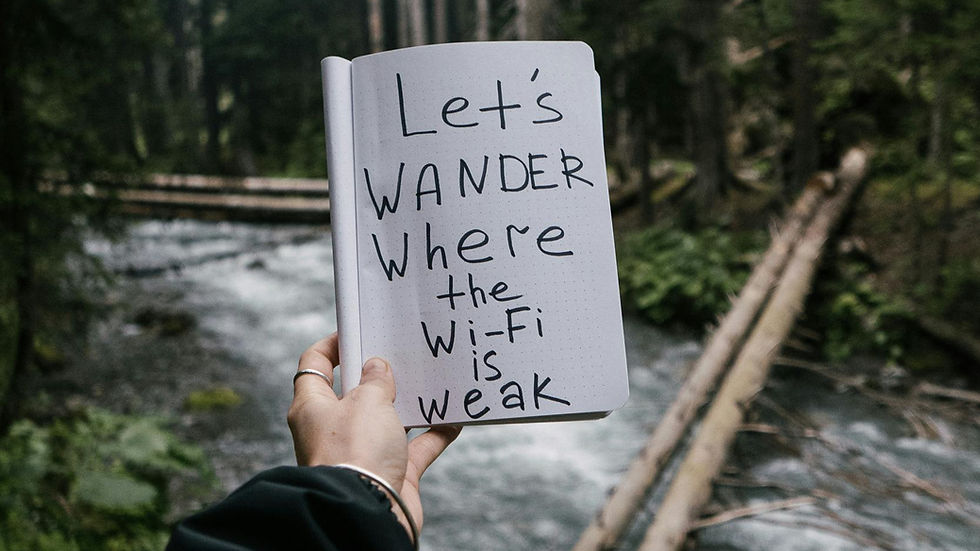
While the silence was deafening at first, and I would reach for my phone out of habit in the early days of my hiatus, over time I grew used to it. I began relishing the silence, the freer head space. I no longer felt the need to post every moment online, tell anyone my plans, or overshare my feelings. Nor did I feel compelled to watch other people's stories or know every update they shared. This isn't out of self-centredness, but a desire to stay focused on my lane and not be distracted by other people's lives or rushed by other people's timelines.
Plus, once you realise that most people regard other people's lives on social media as fleeting, forgettable entertainment, that everyone is too preoccupied with their own lives to be too invested in yours, you no longer feel the need to share every thought in your head on Threads or glimpse of your breakfast on Instagram or rambling video on TikTok. You process everything inward rather than outward, and you realise that all you really need is a journal or conversation with yourself to untangle your thoughts.
Over the last year, the days became more routine, and I would catch myself before it slipped into mundanity. I would find a new place to venture to during lunch, chat with different people, make new plans, read in a new genre.
But routine isn't a bad thing; like with all things, it's how we regard routine that makes all the difference. Routine could mean consistency, it could train your mental stamina for long-term or time-consuming projects, which is what you need for writing a novel.
All this to, say I've finished revising my novel, and the time I've spent with it — longer than I have with my other manuscripts — is unforgettable in that it made me understand myself more, pace myself better so I don't burn out, and learn how to sit in solitude longer without reaching for my phone to fill up the silence. I've realised that what I need is not more stimulation or validation, but the time and space to experience each moment fully. And the best way for me to do that is by keeping my head space clean, my offline life fulfilling, and my value detached from my output.
It's humbling to work in silence. But it's also the best way to find out who you are without the followers, the comments, the views and likes, the story you truly want to tell, the person you want to be, and the life you actually want to lead.
***
In your hermit era and looking for your next read? You can find my books in paperback and e-book format on retailers like Amazon, Blackwell’s, Waterstones, bookshop.org, Kinokuniya, and more.
Not sure where to start?
If you’re a C-drama lover looking for your next fantasy read: The Children of the Desert trilogy is a sweeping romantic fantasy about a desert girl seeking revenge on the Oasis Emperor who destroyed her tribe in his search for a mythical spring—and along the way she meets a rogue prince who has returned to the palace to investigate his brother’s murder.
If you’re in the mood for a whimsical contemporary romance: Haruki Murakami’s After Dark meets Brigid Kemmerer’s Letters to the Lost, Until Morning is about a girl who meets the nocturnal painter of her dreams in her dreams—only to realise he’s not all that she’s imagined him to be. (Ann Liang called this book “gorgeously written and devastatingly romantic.”)
If you’re ready for a character-driven, emotionally-intense read a la We Were Liars by E. Lockhart: No Room in Neverland is a dual-narrative, dual-POV tale about a girl who, with the help of her childhood friend, has to delve into her half-forgotten story set in the fabled Neverland her mother used to tell her in order to recall the events leading to the dissolution of her family.


Comments